Why You're Hungry an Hour After a Protein Bar
It's usually not willpower. It's what most bars are actually made of, and what gets left out.
You eat a bar that promises 20 grams of protein and sustained energy, and an hour later you're rummaging through the pantry. This is a common enough experience that it's worth looking at what's in the average bar.
Most Bars Are Built Around a Binder
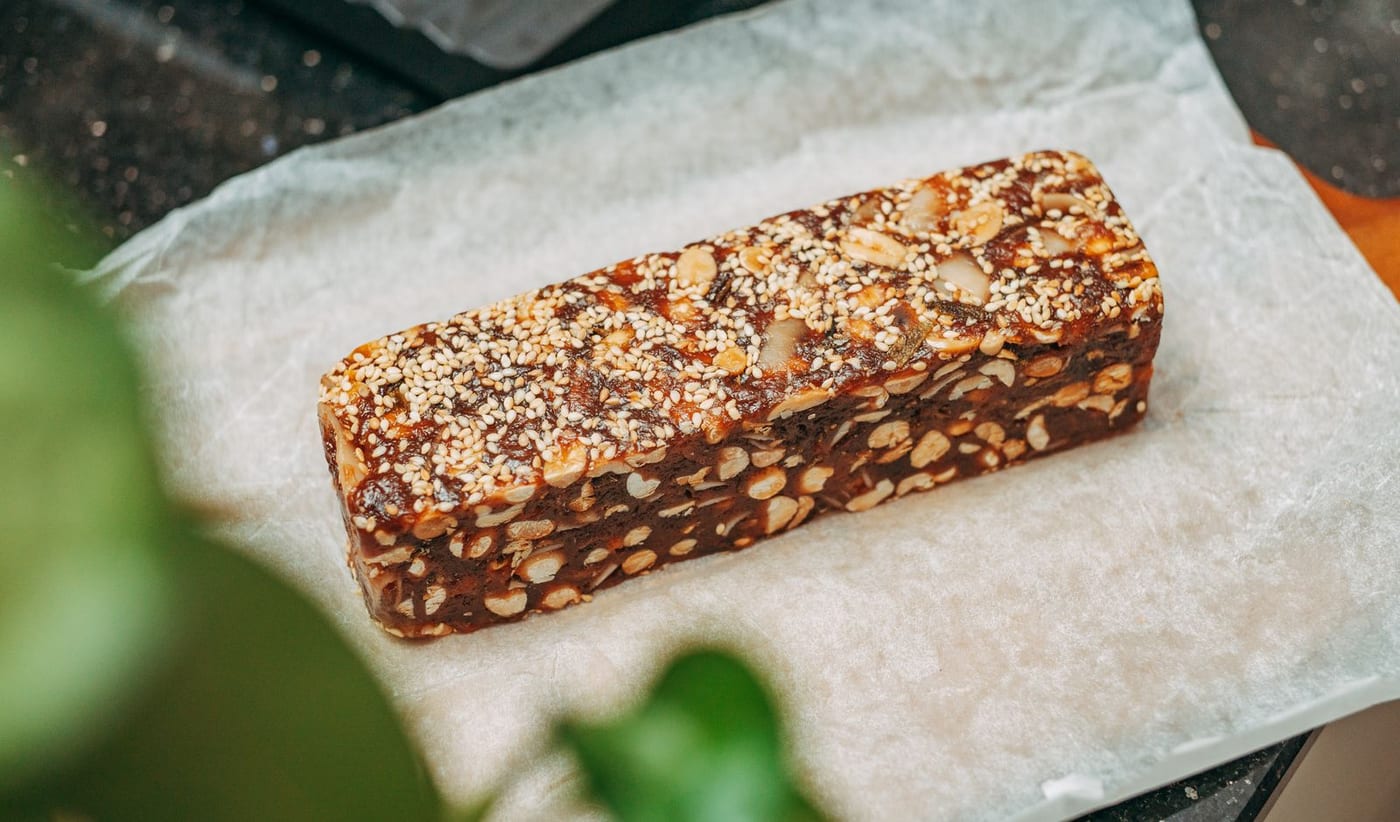
A bar has to hold its shape, survive a warehouse, and stay chewy for a year. That's a food engineering problem, and it's usually solved with syrup — brown rice syrup, tapioca syrup, glucose syrup, or date paste. Those binders are carbohydrate, they're often a substantial fraction of the bar by weight, and they're the reason a lot of "protein" bars are, by mass, mostly something else.
The protein is real. It's just not always the majority of what you're eating.
Fast Carbohydrate Doesn't Stay With You
Carbohydrate that digests quickly gives you energy quickly, and then it's done. If a bar is largely syrup with some protein isolate in it, the fast part arrives first and leaves first. What you notice an hour later is the absence.
Fat and fiber slow that down. Protein contributes too. This is why a handful of nuts and a bar with identical calorie counts don't feel remotely the same three hours later — the composition differs, and composition is most of what determines how long a snack stays with you.
Sugar Alcohols and the Net Carb Math
Many low-sugar bars replace syrup with sugar alcohols — maltitol, sorbitol, erythritol, xylitol. These get subtracted in net-carb arithmetic, but they're not all equivalent. Maltitol in particular is partially absorbed, which means the subtraction is more generous than the physiology, and in quantity these are also a well-documented cause of digestive complaints.
If a bar advertises 2 grams of net carbs and lists 15 grams of sugar alcohols, the honest reading is "this number depends on assumptions I can't verify."
Protein Quantity Isn't the Whole Story
Twenty grams is a lot of protein. But protein arriving alongside 25 grams of fast carbohydrate behaves differently than the same protein arriving with fat and fiber. The headline number on the front of the box describes one ingredient in isolation; how full you feel is a property of the whole food.
What Tends to Work Better
Look for snacks where the bulk of the calories come from whole fat and protein sources: nuts, seeds, eggs, cheese, yogurt without added sugar. What carbohydrate is there should come with fiber attached. There's no binder problem to solve because there's nothing being held into a bar shape.
That's the reasoning behind how we make our clusters. Nuts and seeds make up the majority of our product, with egg whites instead of syrup as the binder.
The same test works on anything already in your pantry: look for a short list of ingredients you'd recognize as food, on a label that doesn't read like chemistry homework.
This article is general information and is not medical or nutritional advice. Individual hunger and energy vary; if this is a persistent concern, a registered dietitian can help more than a blog post can.
Enjoyed this article? Share it with others:
Recommended Reading
How to Read a Snack Label in 30 Seconds
Ignore the front of the package entirely. Here's the order to check things in, and what actually tells you something.
What "Blood Sugar Friendly" Actually Means on a Label
Short answer: legally, almost nothing. Here's how to read past the phrase to the numbers underneath it.